


Hispanic Heritage Month may be over, but the contributions of Latino-owned businesses to Austin aren’t confined to the calendar.
Across the city, entrepreneurs have spent decades building companies, navigating economic uncertainty and developing relationships that extend well beyond the workplace.
For three Latino-owned Austin businesses — a neighborhood restaurant, an advertising agency and a French patisserie — longevity has demanded different things: preservation for one, reinvention for another, and a willingness to seek new customers for yet another. Their experiences offer distinct perspectives on what it takes to build something lasting in a city that rarely stands still.
Joe’s Bakery
Credit: Joe’s Bakery
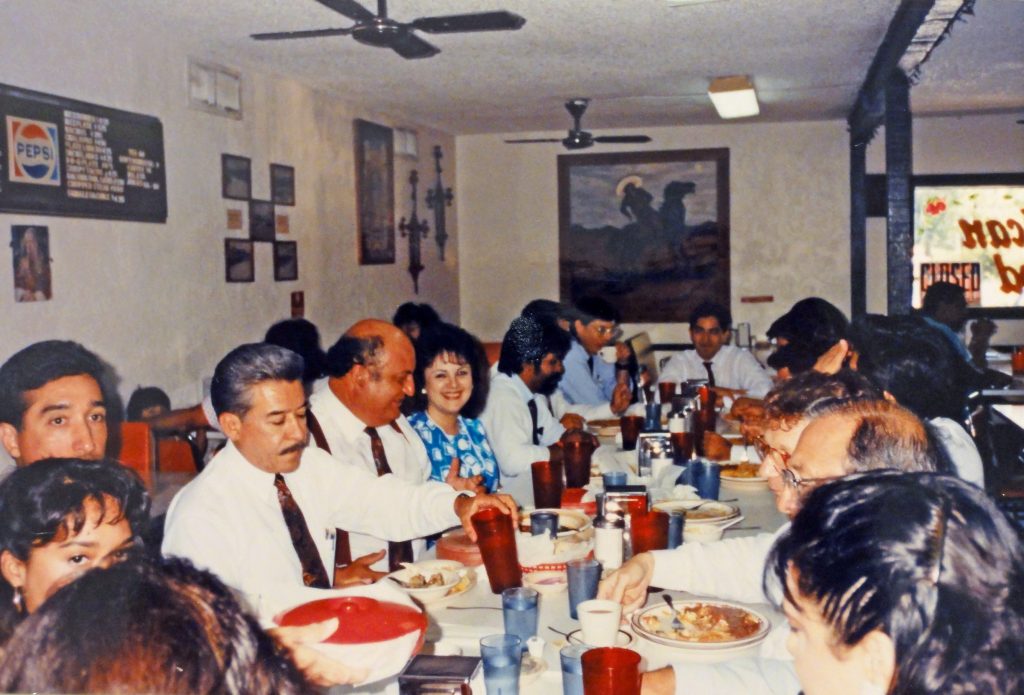
Many years ago, when Regina Estrada’s grandmother started crying as an old stove was removed from Joe’s Bakery & Coffee Shop, Estrada couldn’t understand why. The stove needed replacing, and the family was simply improving their East Austin restaurant.
Decades later, Estrada understands the tears, and what the stove represented.
“It wasn’t like, oh, I’m so sad to see the stove leave. It was just all of the memories,” she said. “You’re taking that physical, tangible piece of our history, and you’re removing it.”
That connection to the past remains central to Joe’s, an East Seventh Street institution that has served Austin since 1962.
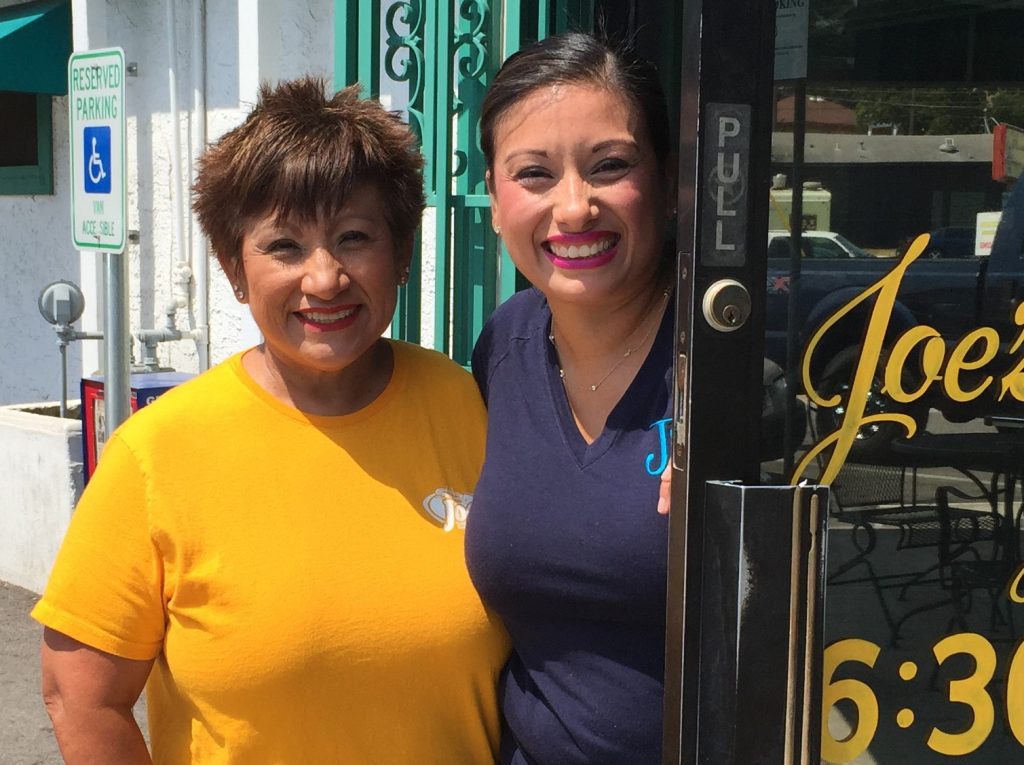
Estrada, the general manager, represents the latest generation of women who have kept the business running. Despite the bakery’s name and her grandfather’s role as its public face, Estrada stresses that, behind the scenes, women have long handled much of the operation.
“I mean, yes, it says Joe’s Bakery, but we’re very much a female-run business,” Estrada said, noting that even before Joe’s opened her great-grandmother managed an earlier family bakery.
One of the family’s most consequential decisions came when Estrada’s grandparents purchased the bakery property. Estrada recalls her grandfather struggling to secure financing in the 1970s, when banks showed little interest in lending to a Mexican American entrepreneur in East Austin.
Owning the land helped Joe’s survive even as the surrounding neighborhood grew increasingly expensive.
Preserving a relationship with longtime customers is important to Estrada. Some elderly patrons have been coming to Joe’s for decades, and she considers their fixed incomes when setting prices.
“I’m really mindful to make sure that we’re staying affordable for them,” she said.
Estrada’s price consciousness has led her to streamline the menu around longtime staples instead of following culinary trends.
“I don’t want to know what’s new on the market. I don’t want to keep up with the Joneses,” she said. The familiar, Estrada feels, is what matters most.
While legacy is important to Estrada, her family’s continued involvement in Joe’s is uncertain. Estrada’s two daughters have worked at the restaurant, but she wants them to have options beyond the demanding life of a family business.
“There’s so much more the world has to offer. And I want them to have the opportunity to see all the things and not be tied down to the restaurant,” she said. “As much of a blessing it is, there’s only so much you can do when you have a small business and you are hands-on.”
Third Ear

When Alejandro Ruelas and his partners founded the LatinWorks advertising agency in 1998, they saw a largely untapped opportunity to help major corporations connect with America’s growing Hispanic population.
The Austin agency went on to produce nationally recognized campaigns for major brands, among them a celebrated 2007 Super Bowl commercial for Bud Light. Drawing on Austin’s growing pool of advertising talent, LatinWorks built a reputation that extended far beyond Texas.
But the business world that fueled its rise has changed, and the agency, now known as Third Ear, has had to change with it.
Ruelas, majority owner and CEO, said the past decade’s political climate made corporations cautious about investing in multicultural marketing. He recalls a sharp downturn following the 2016 presidential election, when some clients withdrew entirely, and others significantly reduced spending.
“Our business at that point in time pretty much collapsed,” he said.
Business recovered somewhat in subsequent years, particularly as corporations renewed their interest in diversity following the 2020 murder of George Floyd. But the current political environment has produced another retreat, Ruelas said.
“The narrative has been so strong, and the boldness with which companies get attacked today can have such a negative impact, that they basically just don’t want to risk it,” he said.
Third Ear continues to work with major clients such as Nissan, Victoria Beer and Humana. But its operations look considerably different from earlier, when the agency employed as many as 200 people, most of them in Austin.
Today, it has slightly more than 40 permanent employees scattered across the United States and Latin America, with roughly 15 in Austin. Freelancers supplement the staff as needed, reflecting an industry shift away from long-term client retainers toward project-based work.
The company recently downsized from 7,000 square feet in the GSD&M building on West Sixth Street to a smaller office near the Long Center for the Performing Arts.
For Ruelas, those adjustments are part of remaining competitive through uncertain times. Despite changing its name and business model, Third Ear continues to emphasize its multicultural expertise, and Ruelas still considers Austin an important source of creative talent.

Credit: Third Ear
He believes companies will eventually recognize the business opportunities they’re passing up by reducing their investments in diverse consumer markets.
“When the business is down, it gives you an opportunity to become really disciplined and really creative in how you do what you need,” he said. “To rethink your cost structure and start thinking about what you must have versus what it would be nice to have.”
Rocheli Patisserie

Credit: Rocheli Patisserie
What began more than a decade ago with making cakes in an Austin apartment has become a thriving East Austin bakery specializing in French pastries, one with a devoted following extending well beyond the Latino community that provided its earliest customers.

Sisters Lynda and Nelly Garcia started Rocheli Patisserie in 2012 with their mother, Rosa Nelly Caballero, a professional chef. The business grew from Nelly’s hobby of decorating cakes and then posting photos of her creations on social media.
Friends and acquaintances soon began placing orders. As the business grew, the sisters moved into a commercial kitchen, supplying coffee shops, hotels and catered events.
But Nelly had long envisioned something more than just custom cakes. She wanted a full-fledged patisserie, a shop dedicated to a variety of delicate sweet desserts.
Nelly’s fascination with French pastries began when she was 4. A French neighbor offered to teach her and her siblings his language, and those lessons ended up introducing her to French baking, creating an appreciation that eventually shaped a business.
Shortly before the pandemic hit, the sisters committed to opening a retail shop at East 12th and Chicon streets. They received construction approval in March 2020, just as COVID 19 restrictions brought much of the economy to a halt.
Rather than retreat, Nelly came up with an idea perfectly suited to the moment: miniature celebration cakes delivered to families unable to gather for birthdays.
“I started posting those on social media,” she said, “and business just exploded.”
The storefront eventually opened in February 2021. The bakery also developed a relationship with Kendra Scott, whose eponymous South Congress jewelry store sells Rocheli pastries in its café.
Today, Rocheli employs 12 people and is known for its macarons and intricately decorated, fruit-shaped mousse desserts.
For Nelly, who spent nearly a decade with the Greater Austin Hispanic Chamber of Commerce, her business’ growth has meant challenging assumptions about what Latino entrepreneurs should offer.
“When I tell people I own a bakery,” she said, “the first thought is always like, ‘Oh, you make pan dulce.’”
Rocheli doesn’t stick to one culinary tradition. Instead, it mixes them freely. Creations have included concha croissants for Cinco de Mayo, pretzel croissants for Oktoberfest and cannoli croissants inspired by Italian desserts.
The sisters hope to expand into other Texas cities. They’d also like to establish a philanthropic initiative that teaches baking and entrepreneurship, particularly to aspiring Latino business owners.
But Nelly doesn’t want the bakery’s Hispanic ownership to define its ambitions or customer base.
“We happen to be Latino, but we don’t want to (be) like, buy from me because I’m a small business minority,” she said. “I hope that you come here because you like the product, regardless of who makes it and for who.”
Chad Swiatecki is a 30-year journalist who relocated to Austin from his home state of Michigan in 2008. He most enjoys covering the intersection of arts, business and local/state politics. He has written for Rolling Stone, Spin, New York Daily News, Texas Monthly, Austin Monitor, Austin Business Journal, Austin American-Statesman and many other regional and national outlets.


