| Getting your Trinity Audio player ready... |
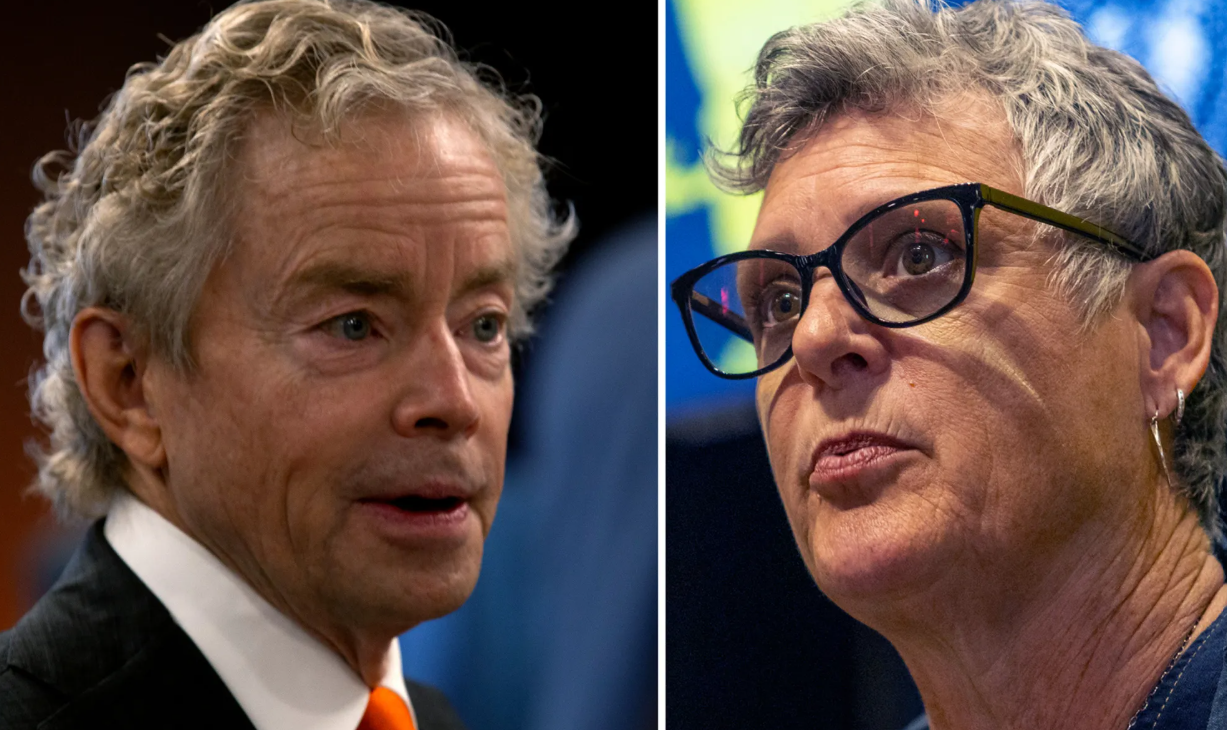
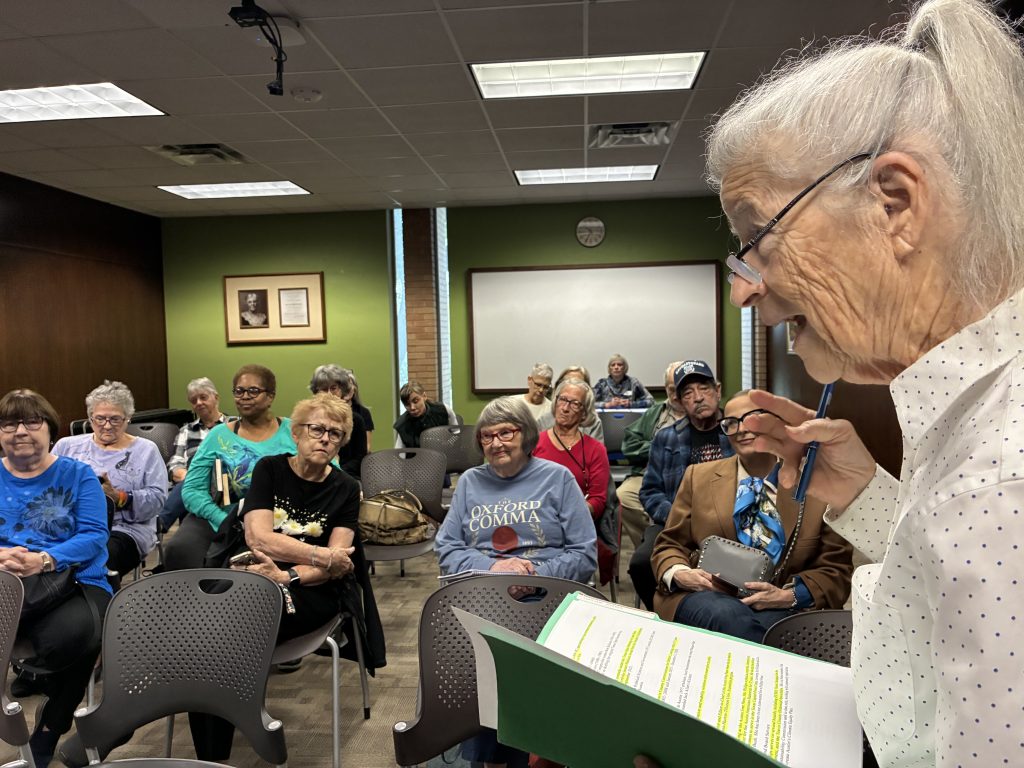
Former Travis County Judge Bill Aleshire, now an open-government attorney, and former Precinct 3 Commissioner Gerald Daugherty told a League of Women Voters forum Saturday that slow-walked records requests, overused closed-door sessions and nondisclosure agreements make it harder for residents to see how local government decisions are made.
“When we are aggressively transparent, when we really want people to understand why we make decisions and what the information was that we’re using to make that decision, we end up with a government that’s much closer to being respected and trusted,” Aleshire told participants gathered at the Austin Public Library’s Howser Branch.
Yet few local public officials believe in giving the public “every bit of information you can possibly give them without committing a crime,” Aleshire said.

The nonpartisan League of Women Voters hosted the event that included Austin Free Press Editor-in-Chief Alberta Phillips as a panelist.
The forum came six months after the Austin City Council voted in a closed door session to spend an estimated $1 billion on gas-fired “peaker” power plants without disclosing the vote tally, and three weeks before Dec. 12 runoffs in three council districts. Peaker plants are designed to be fired up during emergency power shortages.
Some candidates challenging incumbents have cited the lack of city government transparency as one of the reasons they’re running for council.
Aleshire put it this way: “I just never imagined the city of Austin would be my most frequent defendant. I thought it’d be Waco or somewhere. I am amazed that in this very progressive, high-tech community that we have as much trouble getting information from the city.”
Public versus private
Government information runs the gamut from: Confidential information that’s a crime to release; Loads of information subject to discretionary release; and Information that legally must be disclosed. Yet local governments often delay releasing even the information that they know must be disclosed under the Texas Public Information Act, said Aleshire.
Citing trouble obtaining information about Tesla, Inc.’s compliance with the terms of its Travis County tax breaks, Aleshire added, “I have not been impressed with the attitude” of Travis County, either.
The panelists said that disclosure is not always a public good. Daugherty said that governments should not publicly discuss personnel matters nor advertise how much they’re willing to pay for private real estate acquisitions. The state open government law exempts some information such as this from disclosure.
Aleshire said that the nonfatal shooting of State District Judge Julie Kocurek outside her home in 2015 by a courtroom defendant rightfully prompted the state to stop disclosing addresses of some public officials. “There are times when it really is important to not let the whole world know what’s going on,” Aleshire said. “But it should be rare.”
Behind closed doors
Referring to rising uses of government non-disclosure agreements, Aleshire said that these secrecy contracts “aren’t worth the paper they’re written on.” That’s because “no governmental body can contract away the public’s right to public information” under the Texas Public Information Act, he said.
During 12 years as county judge, Aleshire said, “I was never asked to sign” a nondisclosure agreement “and I wouldn’t.”
Daugherty said that he “got in a lot of trouble with our county attorneys” during his 14 years of office for publicly saying things that they wanted to tackle in private executive sessions. He said meeting behind closed doors is “the worst thing” for transparency and public trust.
Phillips mentioned the Austin City Council’s executive session vote in May to spend an estimated $1 billion for new “peaker” power plants to cover electricity shortfalls. The city refused to release to the Austin Free Press motions and votes that were taken in executive session, citing a provision of the law that permits – but does not require – the council to discuss and vote on competitive utility matters in executive session.
“They not only took the discussion behind closed doors, but they didn’t even tell the public after the vote was taken what it was and who voted for what,” Phillips said.
Aleshire said that governments abuse attorney-client privilege in executive sessions, where they ”get an attorney sitting there like a potted plant” to discuss matters that could – and should – be aired openly.
Phillips said the city of Austin has routinely delayed public information requests from the Austin Free Press. It often seeks the Texas Attorney General’s permission to withhold at least some of the requested information, she said. And it frequently delays the release of all the requested information until its attorney general appeals have run their course.
In a notable case, Austin Free Press requested Austin Convention Center records from the city last December. The Attorney General issued a ruling for the city to release some of the records this March but the city did not release those records until four months later. A city spokesperson told Austin Free Press that “a team that’s short-staffed” had “lost that request.”
Radical roots
Aleshire said that he first became interested in government transparency during the 1960s anti-war and civil rights movements when “people felt rightfully that their government had abandoned them and that they couldn’t trust their government.” Returning to the present day, Aleshire said, “Here we are again.”
Daugherty said he’s the son of a “card-carrying Democrat, you know, labor daddy. I walked the picket line with him.” But he said that he’s been a Republican throughout his adult life “because I’ve been a small business guy.”
“This is a tough community in which to put an ‘R’ by your name and try to run in Austin,” Daugherty said. He said his political approach was “to tell you what I know that you need to hear versus what I think you want to hear.” Government officials “need to disseminate good, credible information,” he said, “and not be afraid to do that.”
Aleshire took that moment to drop a more personal disclosure. Turning to Daugherty, he said that “the last time you ran (for county commissioner) I supported you.” Aleshire called his 2016 Daugherty vote “the beginning of my exit from the Democratic Party.” He later added: “I am thoroughly Independent, politically homeless.”
Joanne Richards, the League of Women Voters’ education director, said she organized the forum after transparency topped the list of the league’s survey of member interests.
Takeaways
Daugherty said things are unlikely to change locally until local voters demand transparency from local officials. “We won’t know” until the Dec. 12 city council runoffs, he said, “but what I find so amazing in this community is there are almost no consequences” to business as usual. “You’re probably going to have two incumbents that are going to get reelected.”
Voters will pick three Austin City Council members in the Dec. 12 runoffs. Amber Goodwin and Misael Ramos are vying for retiring District 1 Council Member Natasha Harper-Madison’s seat. Neha Shah is challenging District 3 Council Member José Velásquez. And David Weinberg is trying to unseat District 5 Council Member Ryan Alter.
The League of Women Voters is hosting a televised City Hall forum for these candidates at 6:30 tonight.
An audience member asked the panelists afterward if his takeaway from their presentation should be that, “We have a bunch of horrible people on the Austin City Council doing horrible things.”
Daugherty blamed the political system in which the individual candidates must compete. “The development community are the ones that put the money together to support the ‘Yes’ votes that they get,” he said. “I’m not trying to be accusatory necessarily, but I think I just was.”
“I don’t think they’re bad people,” Aleshire added. “I’ve known (Mayor) Kirk Watson for a long time. He’s a good person. I think he’s slick when it comes to a lot of the politics, but I don’t think he’s a bad person at all.”
Andrew Wheat is the Data, Information and Enterprise Editor for the Austin Free Press.